How Community Colleges Support Workforce Development in Texas
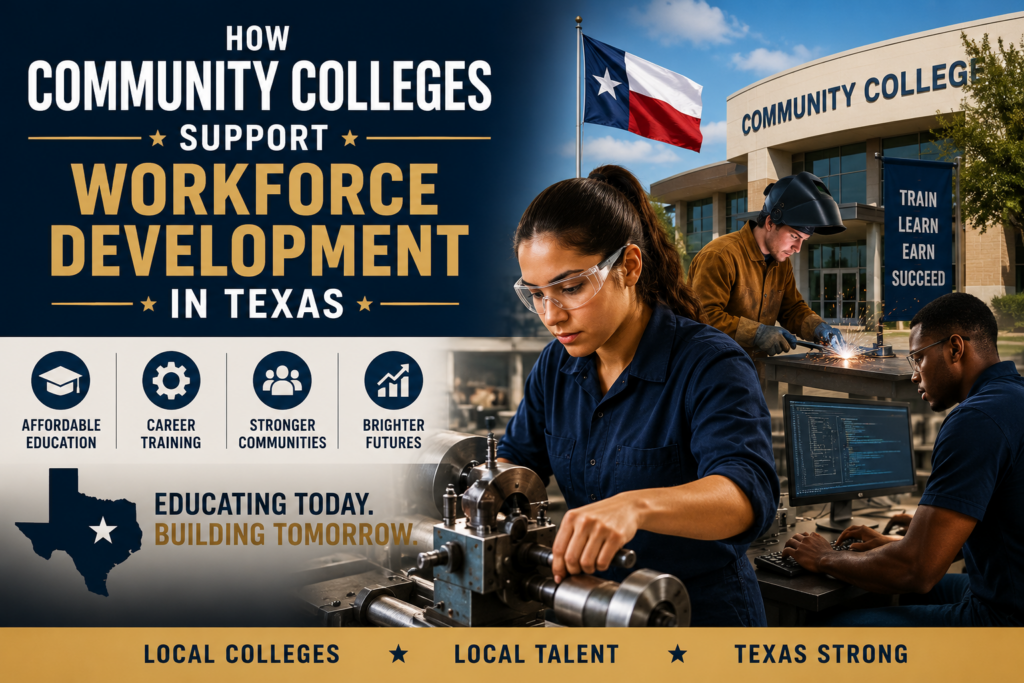
How Community Colleges Support Workforce Development in Texas
Moving to Texas means thinking about practical things: where you’ll work, how you’ll get trained, and what education options fit your budget and timeline. Community colleges in Texas play a central role in matching people to real jobs quickly and affordably. They offer hands-on classes, short-term credentials, career programs, and partnerships with local employers that make it easier to move into a new field or advance in your current one.
What community colleges do for the Texas economy
Community colleges are designed to be flexible and responsive to local labor market needs. In Texas, they’re based in nearly every region—from the Panhandle to the Gulf Coast—and they tune their programs to the industries around them: healthcare near growing hospital systems, manufacturing around industrial corridors, information technology in metro areas, and energy-related programs where the oil, gas, and renewables sectors are active.
This responsiveness is practical, not flashy. Colleges create short-term certificates, associate degrees, and continuing education classes that help people get the specific skills employers are hiring for. That helps both job seekers and employers: workers get training that actually translates into paychecks, and businesses get a pipeline of trained candidates who can start quickly.
Career-focused certificates and associate degrees
Many community colleges in Texas offer career-oriented training that focuses on occupations rather than abstract academics. You’ll find programs in nursing, dental assisting, HVAC, welding, commercial truck driving, cybersecurity, web development, and more.
These programs come in different lengths. Some certificates can be completed in a few months and prepare you for an entry-level role or a certification exam. Associate degrees typically take about two years and include both technical training and general education courses, which can also serve as a pathway to a four-year university if you decide to keep going.
Workforce training that connects directly to employers
A standout feature of workforce training in Texas is employer partnerships. Community colleges work with hospitals, manufacturers, tech firms, and other local companies to shape curricula, provide internship placements, and sometimes even offer on-site training or apprenticeships.
For someone relocating to Texas, this practical partnership is useful. Many programs include clinical placements, capstone projects, or employer-sponsored labs where students get real-world exposure before they graduate—so they don’t show up to interviews only with theory, but with demonstrable experience.
Technical education and apprenticeships
Technical education in Texas covers the hands-on skills employers need right now: electrical work, plumbing, automation, CNC machining, and more. Community colleges offer lab-based training and industry-standard equipment so students learn the tools they’ll use on day one of a job.
Apprenticeship models are growing, too. Some community colleges coordinate registered apprenticeships or pre-apprenticeship programs where you can earn while you learn. That’s an attractive option if you want to avoid taking on debt and prefer a work-first pathway.
How to choose a community college when you move to Texas
Choosing the right community college means looking at more than the campus. Think about the industries in the area where you plan to live, the schedule that fits your life, and long-term options if you might return to school later.
Match programs to local industry
Start by researching the major employers in your potential city or region. If you’re moving to the Houston area, healthcare and energy-related programs are plentiful. Austin and nearby communities have many IT and tech-related offerings. In industrial suburbs and smaller towns, look for strong manufacturing, logistics, and trades programs.
Find a community college that advertises partnerships with local employers or has dedicated workforce training centers. Those connections often mean better internship opportunities and higher chances of job placement after graduation.
Consider cost, schedule, and support services
Tuition at community colleges is significantly lower than at most four-year schools, but prices can vary depending on whether you’re in-district. Practical things to check: in-district vs. out-of-district tuition rates, financial aid options, student support services, childcare assistance, and evening or weekend class availability.
Many colleges offer flexible schedules for working adults: evening classes, hybrid or online options, and accelerated terms. If you’re relocating with a family or working while studying, these options can make a big difference.
Real-life, practical observations for newcomers
If you’re new to Texas, here are some things people commonly notice when they engage with community colleges here:
– Many colleges are integrated with local workforce boards or state funding programs that subsidize training for in-demand jobs. That can reduce out-of-pocket costs for eligible students.
– Campus locations matter. Some community colleges have multiple campuses or training centers. You might register with one main campus but attend classes at a satellite location closer to where you live or work.
– Employers often recruit directly on campus. Job fairs, on-site interviews, and employer-led info sessions are common and useful for job seekers who prefer face-to-face contact.
– Noncredit continuing education is a quick, affordable way to test a field before committing to a degree. These classes may not count toward a degree, but they can provide the basic skills for an entry-level job.
– Transfer support exists. If you think you might want to continue to a four-year university later, ask about articulation agreements and transfer pathways. Texas has established structures that make transferring credits smoother than it used to be.
Using community colleges to build a long-term career
Community colleges don’t have to be just a short-term stop. Many people use them as the first step in a multi-stage plan: gain a certificate, work for a few years, accumulate experience, and then pursue an associate or bachelor’s degree.
Stackable credentials
Stackable credentials let you build skills over time. For example, you might start with a certificate in basic HVAC, earn a more advanced certification while working, and later complete an associate degree that opens doors to supervisory roles. This approach balances income and education and is well-supported at many community colleges in Texas.
Transfer pathways to four-year schools
If a bachelor’s degree fits your long-term plans, research transfer-friendly programs and partnerships between community colleges and universities. Many community colleges have formal agreements with state universities so credits transfer cleanly and students can enter four-year programs as juniors.
This pathway is cost-effective. You can complete two years locally at a community college—often while living at home or saving on housing—and then transfer to finish a bachelor’s degree.
Practical tips for enrolling and succeeding
Here are practical steps to take once you decide to use a community college to support your move and career prospects in Texas:
– Visit the college website and call the admissions or workforce office. Ask about program length, scheduling options, and job placement assistance.
– Look for industry certifications tied to the program. Employers often check for specific credentials more than a generic degree.
– Check for financial aid, scholarships, and state-funded programs that support workforce training in Texas. Some training is offered at reduced cost for people entering high-demand fields.
– Plan for transportation and childcare. Evening classes are useful, but you’ll still need reliable ways to get to labs or clinical sites.
– Use career services early. Resume help, interview practice, and employer networking events increase the chance of landing a first job after training.
Questions to ask when comparing community colleges
When you visit campuses or talk to college staff, these questions will get you practical answers:
– How long does the program take, start to finish?
– What certifications or licenses will I be prepared to take?
– Do you have partnerships with local employers or an employer advisory board?
– What percentage of graduates go straight into related jobs?
– Are evening, weekend, and online class options available?
– How does transfer to a four-year school work if I want to continue my education?
Putting it all together as a new Texan
Community colleges in Texas are not just places to take classes; they are practical gateways into local labor markets. Their emphasis on career programs, workforce training Texas employers value, and technical education texas makes them especially useful for people who are moving and need a reliable, affordable way to re-skill or up-skill.
Whether you’re looking for a quick route into a trade, planning to begin a nursing career, or considering a long-term educational ladder that leads to a bachelor’s degree, community colleges can be a sensible first stop. They balance cost, practical training, and connections to employers in a way that fits the needs of many newcomers.
Closing — realistic encouragement for your move
If you’re planning a move to Texas, take a little time to look at the community colleges near the cities or neighborhoods you’re considering. Check program offerings, talk to admissions or workforce staff, and consider how the local industry mix aligns with your skills and goals.
Community colleges can help you land a job faster, learn hands-on skills, and keep education affordable and flexible. They’re a practical resource for building a stable footing in a new place—and a good way to connect with employers who actually hire in your new community.
Start by making a short list of two or three schools, visit their websites, and schedule a conversation. That small step will give you clearer options and make your move to Texas feel more manageable and purposeful.