How Population Growth Is Changing Mid-Sized Texas Cities
How Population Growth Is Changing Mid-Sized Texas Cities
Texas population growth is reshaping more than just Houston, Dallas, Austin, and San Antonio. In the last decade a wave of people — from other states, from larger Texas metros, and from nearby rural counties — has been moving into midsize cities Texas residents once thought of as quiet alternatives. That steady influx changes daily life in practical ways: where you shop, how you commute, what your kids’ schools look like, and how your neighborhood develops.
If you’re thinking about moving to a mid-sized Texas city, this article explains what’s changing on the ground, why it’s happening, and what to watch for so your move is smoother.
What’s Driving Growth in Mid-Sized Texas Cities
Several trends combine to push people into midsize cities Texas-wide. Affordability is a major factor: housing prices in big metros have pushed some buyers to suburbs and smaller cities where a yard and newer home are easier to afford.
Remote and hybrid work has broadened where people can live. Someone who did commute five days a week now only needs to travel occasionally, so a 30–45 minute drive from a midsize city becomes reasonable.
Quality-of-life amenities are improving in many mid-sized places. Local governments and developers are investing in walkable downtowns, parks, trails, and arts programming. That makes these cities more attractive to families, young professionals, and retirees alike.
Finally, job growth outside the largest metros — in healthcare, education, logistics, and energy services — means more employment opportunities are located in or near midsize communities rather than exclusively in big cities.
How Urban Expansion Texas-Wide Looks on the Street
Urban expansion Texas is happening in visible, everyday ways. Below are common, practical changes people notice when a midsize city grows.
Housing and Neighborhoods
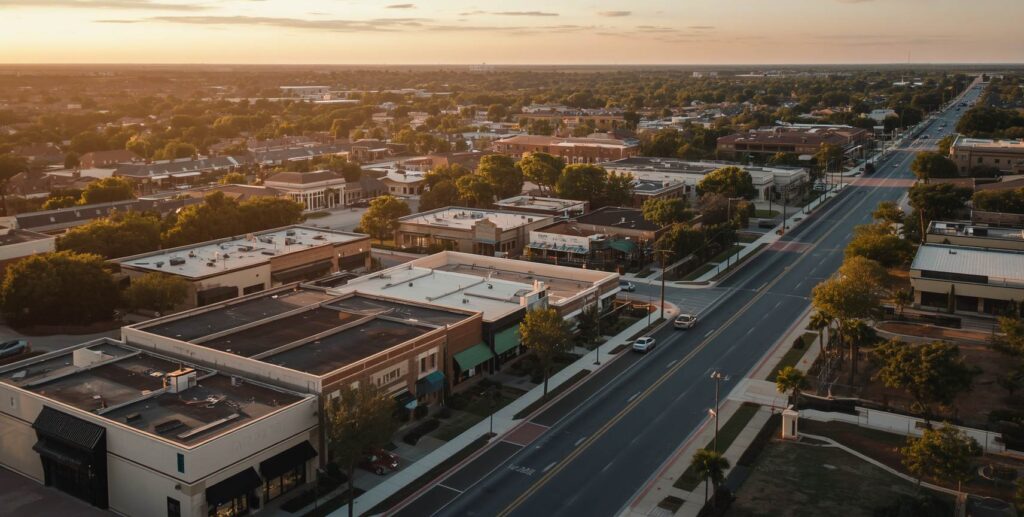
New subdivisions and infill development are common. Master-planned communities with pools and amenity centers pop up on the city edge, while older neighborhoods close to downtown see renovations, duplex conversions, and smaller lot redevelopment.
Home prices and rents that were once low relative to the big cities are rising, though they often remain below metro averages. That can make resale planning and long-term budgeting important when choosing a property.
Expect a mix: new-construction neighborhoods with builders and warranties, and older areas with character that may need more maintenance. If you want a short commute, you may trade off size of lot or a newer home.
Downtowns, Retail, and Food Scene
Many midsize Texas downtowns are in the middle of quiet revitalization. You’ll see old storefronts converted into coffee shops, co-working spaces, and small restaurants. A few craft breweries or food-truck pods often follow.
At the same time, new retail corridors develop along highways and major roads: grocery stores, national chain restaurants, and big-box retailers appear to serve the growing population.
Locals experience both benefits and friction. It’s great to have more options, but popular spots get busy quickly — weekend waits at a new rooftop bar, or a longer line at the popular taco place on Friday night.
Infrastructure, Commutes, and Traffic
Roads change first. You’ll notice more traffic during peak hours and new turn lanes, traffic signals, or roundabouts under construction. Some towns widen major arteries; others opt for targeted intersection improvements.
Public transit in many mid-sized Texas cities is limited, but some places expand bus routes or trial microtransit options. If you rely on transit, check current service maps rather than historical expectations.
Commuting patterns can shift. Instead of everyone heading to a central downtown, rush-hour peaks may split by direction: commuters headed to a local business park, regional airport, or neighboring city as well as occasional trips to the nearest big metro.
Schools and Childcare
School enrollments rise quickly in growing neighborhoods. That means new classrooms, portable classroom trailers, and frequent boundary adjustments as the district balances capacity.
Many districts pass bond measures to build schools or expand facilities. If you’re moving with children, research the school attendance zones and ask about projected growth for the next five years.
Childcare availability can be tight. New centers open, but waitlists are common, especially for infant and toddler care. Plan early for preschool and daycare enrollment.
Healthcare and Public Services
Healthcare systems respond by expanding clinics, urgent care centers, and sometimes a new hospital wing. While basic care becomes more accessible, specialized services may still require travel to a larger metro.
Public safety staffing and fire station locations often adjust as neighborhoods expand. Service response times can change during rapid growth phases until staffing and stations catch up.
Parks, Trails, and Open Space
One positive pattern: cities that plan for growth often invest in parks and trails as part of new developments. You’ll see more greenways, dog parks, and playgrounds in newer neighborhoods.
Smaller towns that emphasize quality of life preserve or add city parks to support recreation. However, existing parks may become busier on weekends as more residents use them.
Local Business and Employment
Small businesses see opportunities when population grows. Expect more options for personal services — salons, fitness studios, specialty grocery shops — and more local job listings in retail, construction, healthcare, and education.
At the same time, the increased competition can make it harder for new mom-and-pop stores to find affordable storefronts for long-term stability.
Real-Life Observations from People Moving Here
People who recently moved to midsize cities Texas commonly share a few practical observations.
First, the convenience trade-off is real. You often get lower housing costs and more space, but local amenities that once felt “plenty” can feel limited as new residents arrive. Grocery shelves are not empty, but specialty items may still require a trip to a larger city.
Second, neighbors are engaged. New residents tend to form community groups, neighborhood Facebook pages, and local volunteer teams. That makes it easier to get recommendations and stay up to date on construction and school changes.
Third, timing matters. Building a home in a new subdivision might mean waiting for developers to finish roads, sidewalks, and landscaping. Ask builders for realistic timelines and contingency plans for utilities and access roads.
Practical Checklist for People Considering a Move
Here are concrete steps to reduce surprises when moving to a growing mid-sized Texas city.
Research the School District and Growth Projections
Look up enrollment trends and any upcoming bond measures. Talk to a school’s front office about class sizes and projected boundary changes.
Understand Commute Times and Alternate Routes
Drive the route you’d take during rush hour. Look into park-and-ride options and check the availability of commuter routes if you’ll travel to a nearby metro periodically.
Check Utilities and Internet
Confirm water and sewer providers, and ask whether the property lies in a special utility district. Verify internet providers and speeds — reliable high-speed access is essential if you work from home.
Inspect Flood Risk and Drainage
Some rapidly developing areas have drainage issues. Review FEMA maps, ask neighbors about standing water after storms, and consider a floodplain-certified inspector.
Understand HOA Rules and Builder Warranties
Get a copy of HOA covenants and read them. If buying new construction, ask about timelines for community amenities and what’s covered under the builder’s warranty.
Plan for Childcare and Healthcare Access
Visit local childcare centers and doctor practices early. Many families find that signing up or joining waitlists months ahead is necessary in growing communities.
Budget for Property Taxes and Service Fees
Growth can mean new tax districts or MUD (municipal utility district) assessments. Verify current property tax rates and any additional fee structures that apply to new subdivisions.
How Local Governments and Developers Are Adapting
Local governments tend to respond in a few practical ways: updating comprehensive plans, rezoning land for higher-density housing, and improving water and wastewater capacity. Developers increasingly include mixed-use components and community amenities in plans.
Rather than instant transformation, change is often incremental. Road projects are scheduled years in advance, school construction takes time, and utilities are expanded phase-by-phase. That means the city you move to today may look noticeably different five years from now — again something to consider if you care about long-term neighborhood character.
Getting Plugged In: Community and Everyday Life
One advantage of midsize cities is neighborliness. Civic clubs, farmers markets, youth sports leagues, and library programs remain accessible even as populations rise.
Join a community Facebook group, check the city’s event calendar, and visit the local chamber of commerce website to learn what’s happening. Volunteering at a school or park cleanup is a fast way to meet people and learn about local priorities.
Expect more events: art walks, brewery tastings, and small music festivals. These activities help new residents feel part of the city’s evolving identity.
Balancing Expectations: What Changes Fast and What Changes Slowly
Rapid change is visible in housing starts, new restaurants, and increased traffic. Those are often the first indicators of urban expansion Texas-wide.
Slower changes include the broader civic fabric — cultural institutions, higher education expansions, and major hospital projects. These require sustained investment and tend to appear over a decade rather than a year or two.
Understanding which changes happen quickly vs. slowly helps set realistic expectations about living through a growth phase.
Final Thoughts and a Practical Closing Note
If you’re considering a move to a midsize Texas city, you’re joining a lot of people who want more space, reasonable costs, and growing local amenities. Growth brings convenience, variety, and new neighbors — and it brings transitional challenges like traffic, higher demand for schools and childcare, and construction noise.
Do your homework: visit at different times of day, talk to residents, check school and utility plans, and budget for taxes and potential district fees. Think about the lifestyle you want five years from now, not just the house you want now.
Finally, remember that many midsize Texas cities retain a strong sense of community even as they grow. Newcomers often find it easy to get involved and help shape how their city evolves. With some preparation and realistic expectations, moving to a growing Texas city can be a practical and rewarding next step.
If you want specific checklists for a particular city or a list of resources to check before your move, we can put one together tailored to your target community. You don’t have to navigate texas migration trends alone — a little planning goes a long way.